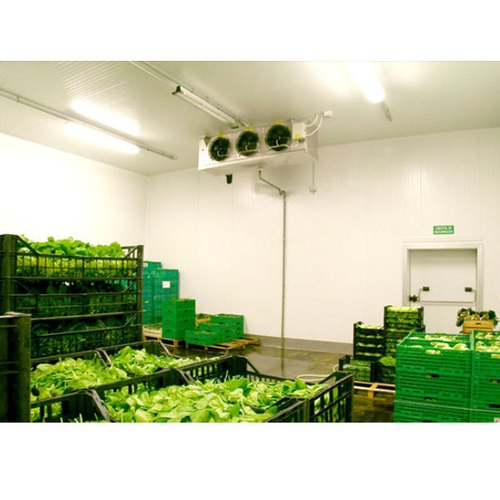
Refrigerated storage, also known as cold storage, is a type of storage facility that maintains a controlled temperature environment to store perishable goods. Here’s how it works:
Basic Components:
- Insulated Storage Chamber: A well-insulated room or chamber that prevents heat from entering or escaping.
- Refrigeration System: A cooling system that circulates refrigerant through evaporator coils to absorb heat from the storage chamber.
- Temperature Control System: A system that monitors and controls the temperature, humidity, and air circulation within the storage chamber.
Process
- Cooling: The refrigeration system cools the storage chamber to the desired temperature (usually between -20°C to 10°C).
- Air Circulation: Fans circulate the cooled air throughout the storage chamber to maintain a uniform temperature.
- Humidity Control: The system controls humidity levels to prevent moisture damage or condensation.
- Temperature Monitoring: Sensors continuously monitor the temperature and alert operators to any deviations.
- Defrosting: The system automatically defrosts the evaporator coils to maintain efficiency and prevent ice buildup.
Types of Refrigerated Storage:
- Frozen Storage: Stores goods at -20°C to -30°C for long-term preservation.
- Chill Storage: Stores goods at 0°C to 10°C for short-term storage or to maintain freshness.
- Temperature-Controlled Storage: Stores goods at specific temperatures (e.g., pharmaceuticals, vaccines).
Benefits
- Preserves Perishable Goods: Extends shelf life and maintains quality.
- Reduces Spoilage: Minimizes losses due to temperature fluctuations.
- Meets Regulatory Requirements: Complies with food safety and pharmaceutical storage regulations.
Refrigerated storage is essential for industries like food processing, pharmaceuticals, and logistics, ensuring the safe and efficient storage of temperature-sensitive products.
Leave a Reply